
Circuit Wire — a daily news update from the Circuit.
Several times a week, Brady O'Rourke walks to the busiest street near his house in Crystal, Minnesota, carrying a roof rake with a bright yellow sign taped to the end. He raises it in front of a Flock camera at the intersection and blocks the lens while traffic passes, NPR reported on Friday. He said he does not want to pay to be surveilled outside his own home.
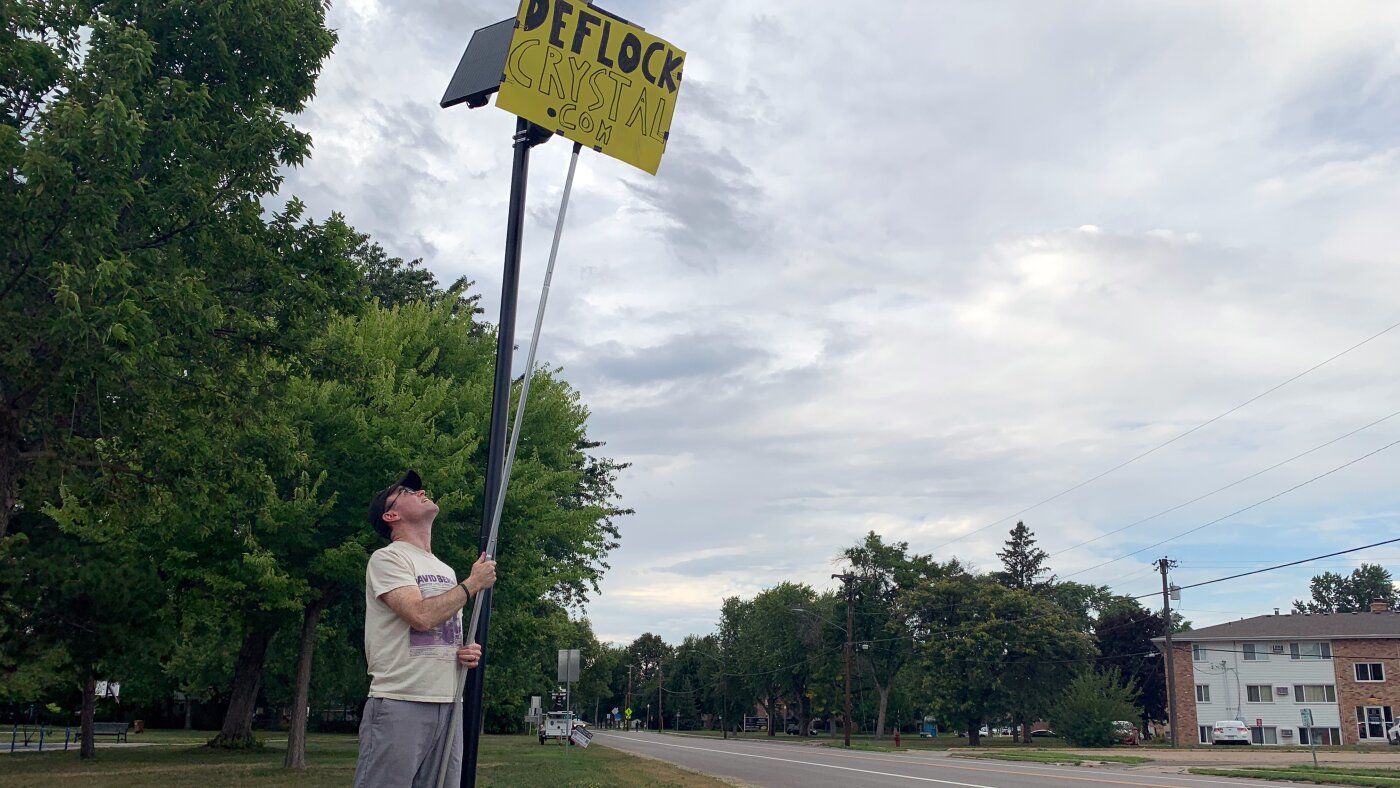
O'Rourke is one of a growing number of Americans confronting automated license plate readers. An NPR review of local news reports found Flock cameras have been vandalized in at least 36 states. People have stolen the units, sawed down the poles, crashed cars into them, covered the lenses in paint and stickers, and shot at them. Social media carries instructional videos, including clips on cutting through a metal pole quietly.
Flock Safety, based in Atlanta, says more than 5,000 law enforcement agencies use its technology. The advocacy group DeFlock, which maps the hardware, counts more than 130,000 AI-powered plate readers on American streets and says at least 100 cities have switched the cameras off or canceled contracts with Flock or similar vendors. DeFlock ran a national week of action through Saturday with more than 25,000 people registered for protests and education sessions.
The company disputes the framing of the campaign. Chief executive Garrett Langley told NPR that Flock does not own or sell the data, and that cities control how long it is stored and who it is shared with. He also said people taking down cameras are committing a felony and should raise concerns with their city council instead. Last week Flock changed several features, shortening its recommended retention period and cutting off access for officers who appear to be misusing the tool.
The pushback reached the company's own conference. Advocates rallied outside Atlanta City Hall on August 18 as Flock opened its three-day Flock Forward event, Atlanta News First reported. Organizers called on Atlanta police and on Home Depot to end their contracts. Home Depot said it does not grant federal law enforcement access to its license plate readers.
Documented misuse sits behind much of the anger. Officers have used plate reader data to track former partners, and some agencies have run searches tied to immigration enforcement without local government consent. A Texas sheriff's office used the system to trace a woman who may have had an abortion. A 2024 analysis by a police department in California found Flock misread plates in 71 percent of the alerts it sent.
Police leaders continue to point to results. In Conyers, Georgia, detectives used the Flock platform to identify a vehicle in a fatal hit-and-run that killed Andrea Cantrell, 43, on August 17. An arrest followed within 12 hours of the first call.
Want a weekly roundup of the major stories shaping the security industry? The On The Circuit newsletter is read by more than 12,000 protection professionals.
Spotted something we should cover? Send tips and feedback via circuit-magazine.com.