
Circuit Wire — a daily news update from the Circuit.
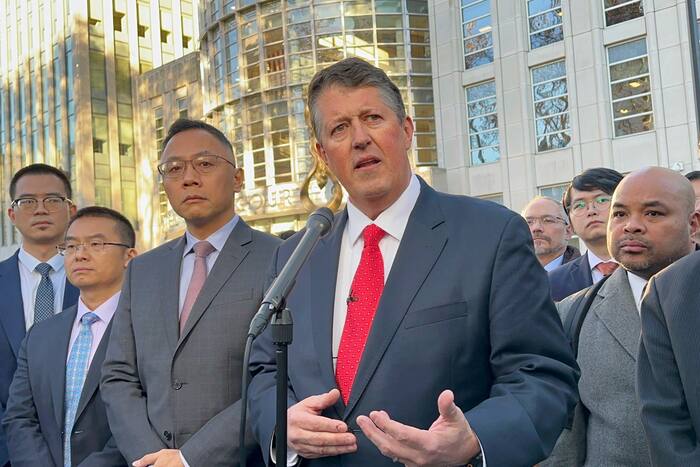
A federal jury in the Eastern District of New York convicted Huawei Technologies and three of its subsidiaries on Tuesday, November 24, of conspiring to steal trade secrets, defrauding banks and violating US sanctions on Iran. The Justice Department announced the verdict at the end of a three-month trial.
The convicted companies are Huawei Technologies Co., Ltd., its Chinese subsidiary Huawei Device Co. Ltd., and two US subsidiaries, Futurewei Technologies Inc. and Huawei Device USA Inc. The counts cover conspiracy to steal trade secrets, wire fraud, bank fraud, conspiracy to defraud the United States, money laundering conspiracy, and violations of the International Emergency Economic Powers Act, the law behind US sanctions.
Jurors did not accept the whole case. The Associated Press reported that they acquitted Huawei of the most serious charge, a racketeering conspiracy to steal intellectual property from American companies.
The Justice Department listed several episodes from the trial evidence. In one, an employee took a part from T-Mobile's phone-testing robot, known as Tappy, out of a controlled lab in a backpack. Others involved Cisco router source code, the photographing of Fujitsu equipment by a person wearing a badge that read "Weihua," and a university researcher who shared confidential information from the storage firm CNEX. Huawei also filed a patent application using a confidential slide that antenna maker Quintel had provided under a non-disclosure agreement.
On Iran, the department said Huawei operated in the country under the name Skycom. It said the company helped the Iranian government with an internet backbone and mobile network access, assisted the state in monitoring and censoring internet users, and supplied surveillance cameras used to watch protests. Huawei told banks, journalists and the US government that Skycom was a business partner, when it was a wholly owned subsidiary, and that it had restricted its Iran business in 2011. Those statements gave it access to billions of dollars and to US dollar clearing.
Huawei's lawyers argued at trial that investigators had used isolated wrongdoing by a few of the company's more than 200,000 employees to build a false picture. "You can't steal a secret that isn't a secret," defense lawyer Brian Heberlig told jurors in his closing argument, according to the AP. The AP report did not include a statement from the company after the verdict. Chinese officials have accused Washington of using national security as a pretext.
The US first announced charges against Huawei in early 2019 and later expanded them. The company's chief financial officer, Meng Wanzhou, was arrested in Canada in 2018 on charges of misleading the bank HSBC about Huawei's Iran business. She returned to China in 2021 in an exchange that freed two Canadians held there, and the US dropped its case against her.
Sentencing is set for September 14, 2027. The Justice Department said the companies face criminal fines, forfeiture and restitution, and did not give amounts. The FBI's New York Field Office investigated the case.
Want a weekly roundup of the major stories shaping the security industry? The On The Circuit newsletter is read by more than 12,000 protection professionals.
Spotted something we should cover? Send tips and feedback via circuit-magazine.com.